

For my mother, Jean. And for anyone still carrying someone they love.
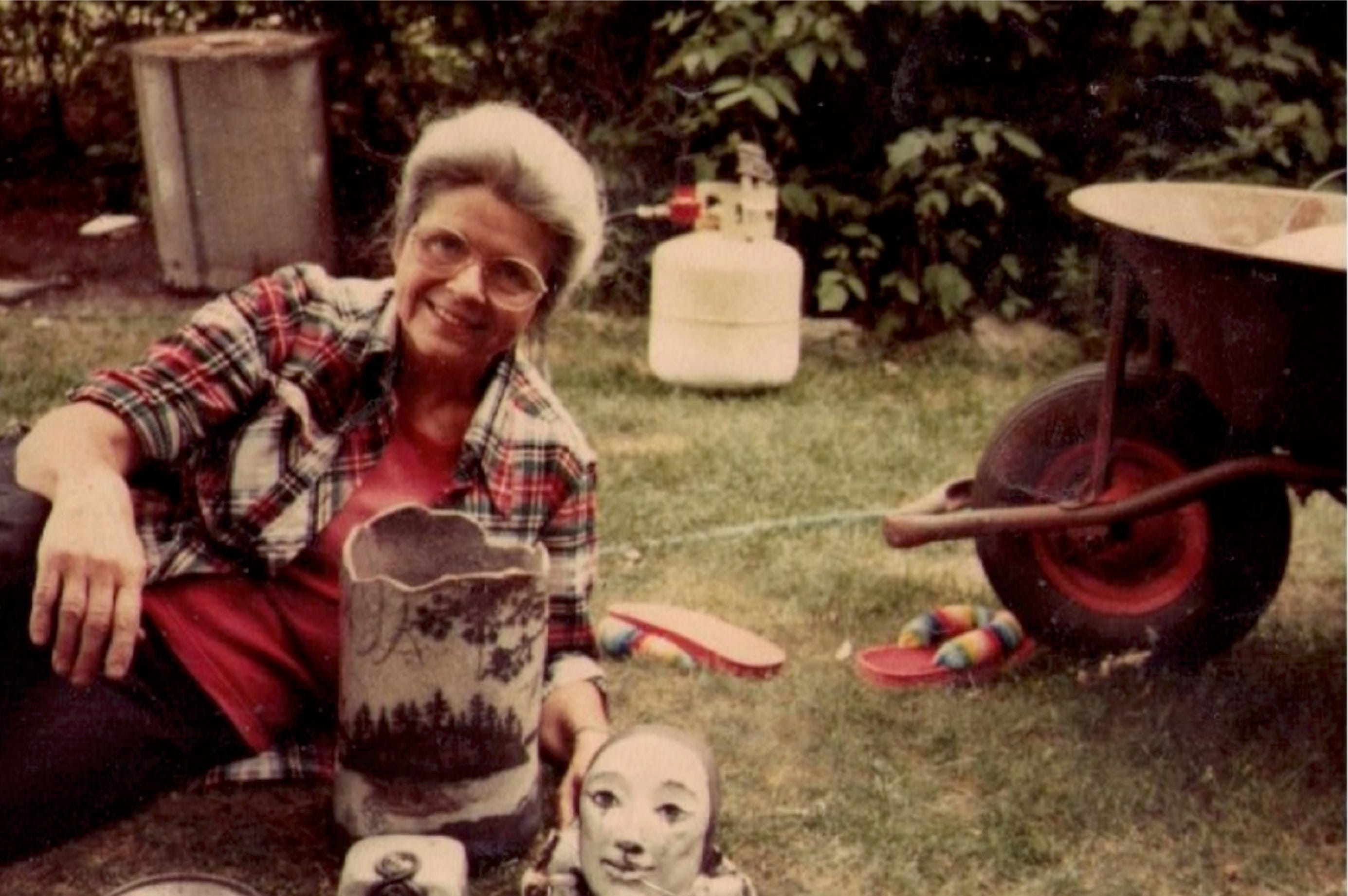
At sixty, my mother became a potter, beginning a thirty-five year career she’d carry all the way to ninety-five. Maybe her hands called to play in the mud after so many years of holding a paintbrush, or rotating the focus on the lens of her Leica. Those activities were replaced with throwing heavy slabs of clay on a table, cutting a chunk off with a wire, and wedging the clay to get the bubbles out. She was a breadmaker, so her hands were already comforted by familiar rocking and folding. She’d spiral those bubbles out and then roll the clay to a brick shape. It would become her earthen canvas upon which she’d emboss, imprint, and carve textures. She had shoeboxes filled with textured shapes and stamps. A cohort of barnacles stuck to an oyster shell, a metal handle from a broken spigot shaped like a flower, an orphaned earring from her jewelry box.
Once the brick was textured and stamped, she’d spread a sheet on the studio floor and throw it down over and over. It was an instant cardio workout for that heart patient, as well as a slow process that allowed gravity to form the design. She would often have to take breaks to catch her breath. Each time the clay hit the ground, it would spread and splay, distorting a little more. She would keep going until it flattened itself to a thickness perfect for the walls of a wrapped vessel. She learned to add a curve, or curl, coaxing gravity to elongate and transform those serendipitous impressions.
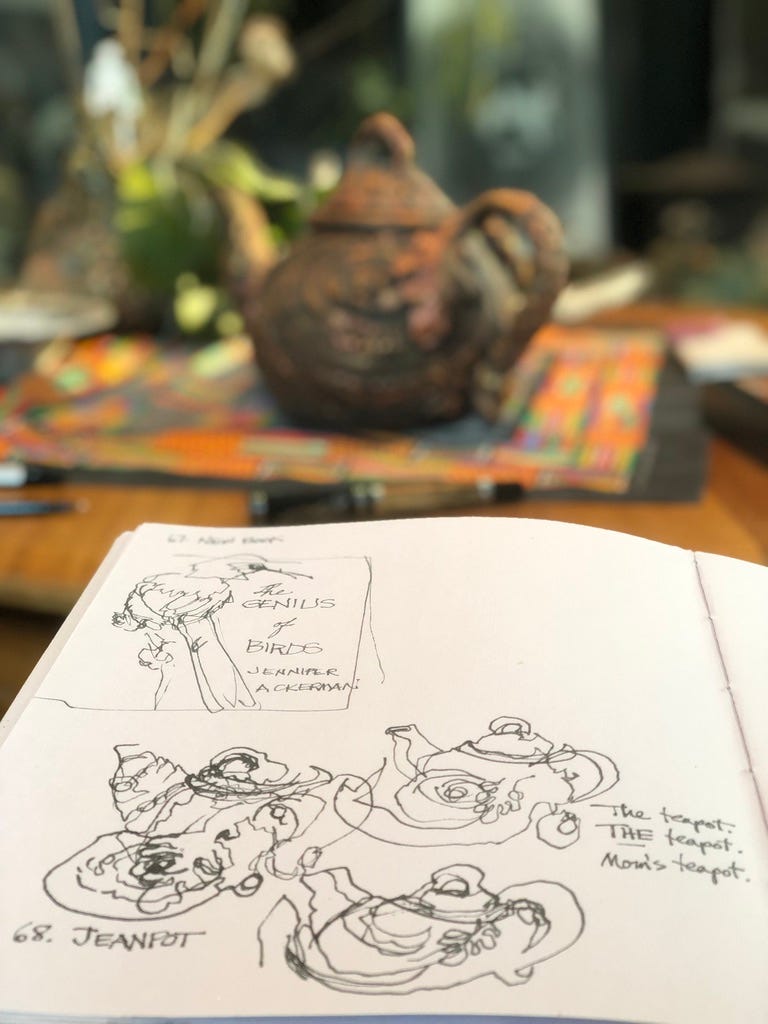
These handbuilt one-of-a-kind pots became her signature style, what she called her Jeanpots. Earthy and organic, with sides like petrified bark. Despite always having a cup of black coffee at her side, one of her first pieces was a teapot decorated with sculpted acorns and oak leaves around the handle and lid. She hadn’t yet mastered the technique, so it weighed a ton. Beautiful, but unusable. Only at an Olympic weightlifter’s tea party would it pass. It would take two hands to lift it, and that was without hot tea in it. She couldn’t throw it away, this beautiful failure. We joked about it.
I was sitting beside her hospital bed. She was on that home stretch we both dreaded. Kidney failure. It was a matter of time, days now, and we spent the last of it squeezing in precious conversations. Totally alert. Like still-knowing-your-credit-cards-by-heart alert. She was playing Scrabble with a stranger online while reminding me of details I didn’t want to discuss.
“There’s a manila folder marked FUNERAL. It’s in the little file box in the back bathroom shower.”
“Yeah, yeah, it’s all good, Mom. I’ll work it out.”
“No, listen to me. Years ago you said you dreaded writing my obit. I’ve compiled it all for you to lessen the load after I’m gone. Just fill in the dates and you’re good to go.”
It was like she was discussing plans for a party. I sat back, mouth agape, and stared out the window. I couldn’t imagine my life without her. That time was approaching quickly.
I knew she had prepaid for the funeral, but this was such a loving thing to do for me. My load did feel lighter.
I managed a tight-lipped thank you.
Two days later, I needed to open that file. There it was, everything ready for a proper sendoff. I felt a final exhale.
I had requested the funeral home place her ashes in that acorn teapot. They agreed but said it would have to be sealed shut. I didn’t want that. No way. My mother had requested scattering on my forest path, and I had this romantic idea of sprinkling as I walked, pouring her as I went.
So I told the funeral director that was fine, there’d be no urn. I’d just take the cardboard option. They delivered it to me. It was just as I remembered my dad’s ashes. A crisp white cardboard box, almost like a big takeout food container. I’ll have Mom To Go, please.
At the celebration of life the next week, we had arranged several pieces of her pottery, photographs, and artwork on display. In the centre sat the teapot. Before the guests arrived, I went into the public washroom, heart pounding, and removed the ashes, transferring them oh so carefully from cardboard to clay. All afternoon, as people passed by admiring her work, I’d look over and hold my breath. I had visions of someone lifting the lid to peek inside, or worse, picking it up, misjudging the weight, dropping it, and my mother confetti-ing among her friends.
For almost a year, she sat inside that tea-now-urn on my piano, gathering dust on the outside, holding hers safe until the right time. On the first anniversary of her death, I took her for a walk. I dusted off the urn, and held that darn pot with two hands. I had to brace it against my hip like a heavy toddler. I forgot how weighty that damn thing was. I walked into the woods and started to pour her through the spout slowly. Beads of sweat formed on my upper lip as I wound my way through the poplars to the willows at the western border of the property. This would take forever, and my arms would give out before they would all pass through the spout. Those willows at the back of my woods were her favourite section of my path, and as I stopped there to rest on a big stump, my heart heard her say, Right here.
Since then, I’ve let the willow path grow over. The following year, a storm took down a bunch of those trees and branches. I just let them fall and lie there like pick-up-stix. I figured she was happy there.
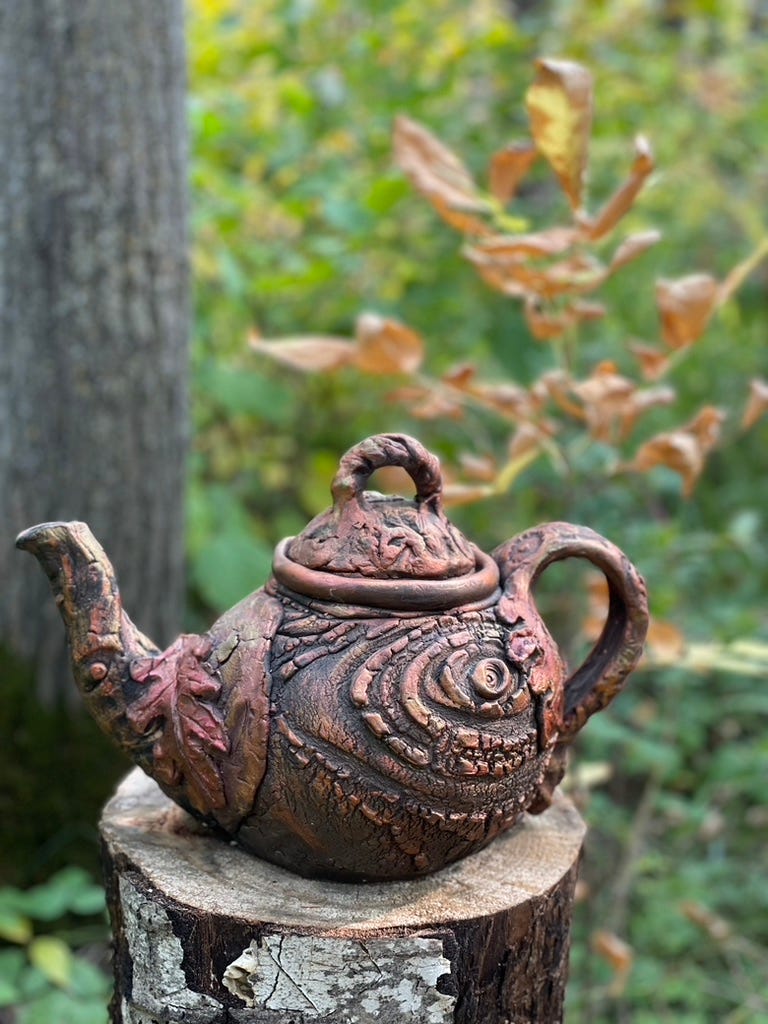
Eight years later, I placed some of my mother’s pottery back into the woods for an art exhibit, setting the teapot on a newly sawn plinth beside a small oak seedling. It felt like a continuation rather than an ending. A vessel that had finally found its function. I honoured her hands and the creative legacy they passed on to me, wondering again who was holding who. I could hear a merlin laugh in the distance. The teapot belonged to the trees, to bark and acorns and gravity. It never poured anything but her ashes, and now it sat empty, balanced, at home
At the end of the exhibit, I carried the teapot back to its place on the piano. It was still heavy. I felt light.
Today, on Mother’s Day, I feel even lighter.
INVITATION
Think of something made by someone's hands that you still have. Hold it, or hold it in your mind. Write one sentence about what it holds now.
With love,

P.S. I feel my writing has sprouted wings since talking classes with Ann Randolph. I’ve been attending her online sessions since last September and I’m going back for more. Unmute Yourself begins again on the 18th of May -- the last offering until the fall. If you’re interested, I’ll see you in the Zoom room. Here’s the link.
I felt the weight of your burden as you carried her into the woods.